-

- Kitchen Refrigerator Buying Guide: Built-In, French Door, Side-by-Side & Counter-Depth
Kitchen Refrigerator Buying Guide: Built-In, French Door, Side-by-Side & Counter-Depth
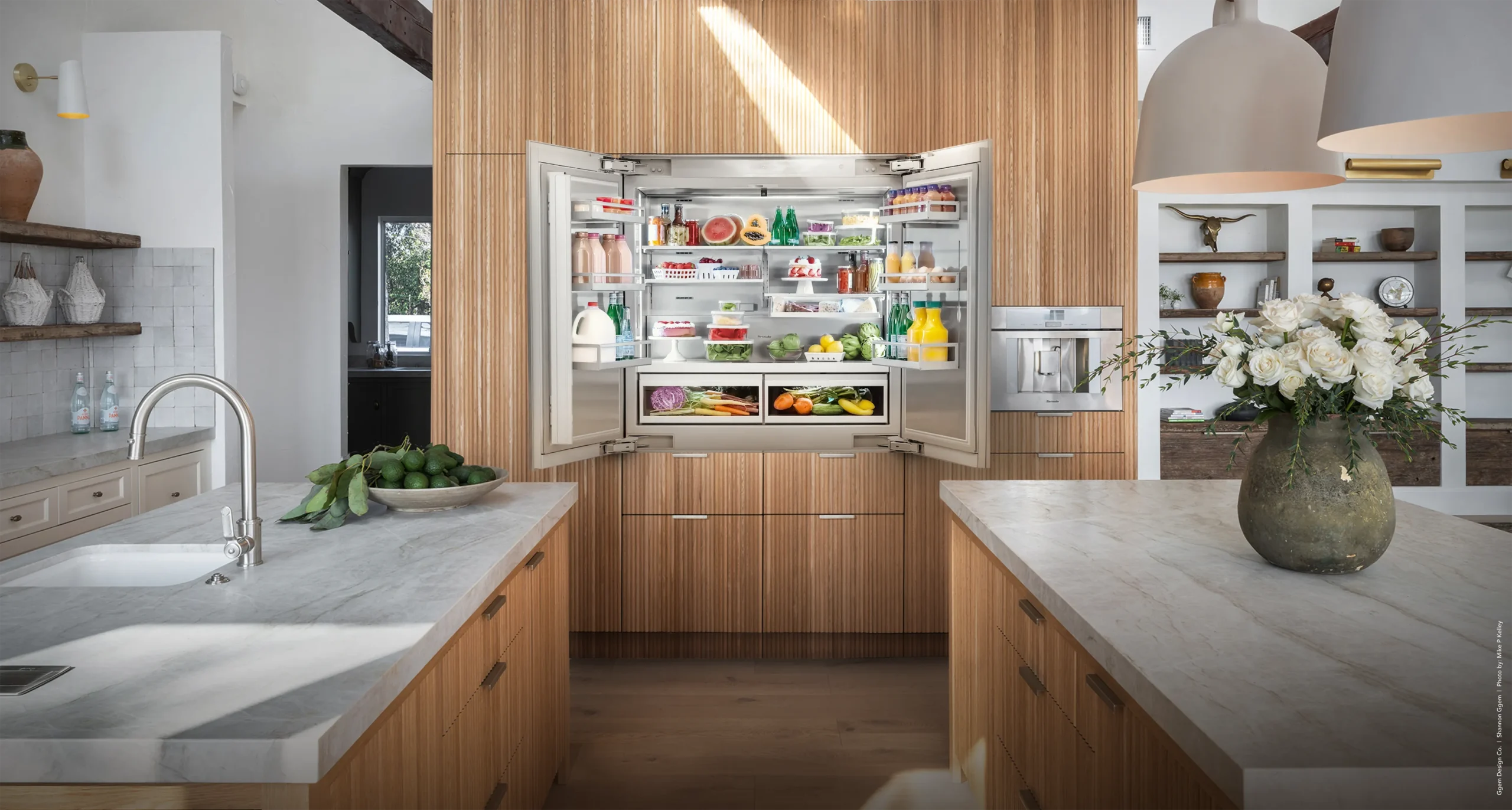
Your refrigerator is the appliance you open more than any other in your kitchen — often 50 times a day or more. Yet with built-in, French door, side-by-side, bottom freezer, and counter-depth options all on the market, choosing the right one can feel more complicated than picking a range or a dishwasher. Each configuration comes with real trade-offs in storage capacity, price, layout fit, and long-term reliability.
At Castle Kitchens, we help homeowners across Markham, Toronto, and the GTA choose refrigerators that fit both their kitchen design and their daily habits. Our Markham showroom carries built-in and freestanding models from Gaggenau, Thermador, Miele, and Liebherr, and more, so you can compare finishes, configurations, and interior layouts side by side before you buy.
What Is a Built-In Refrigerator?
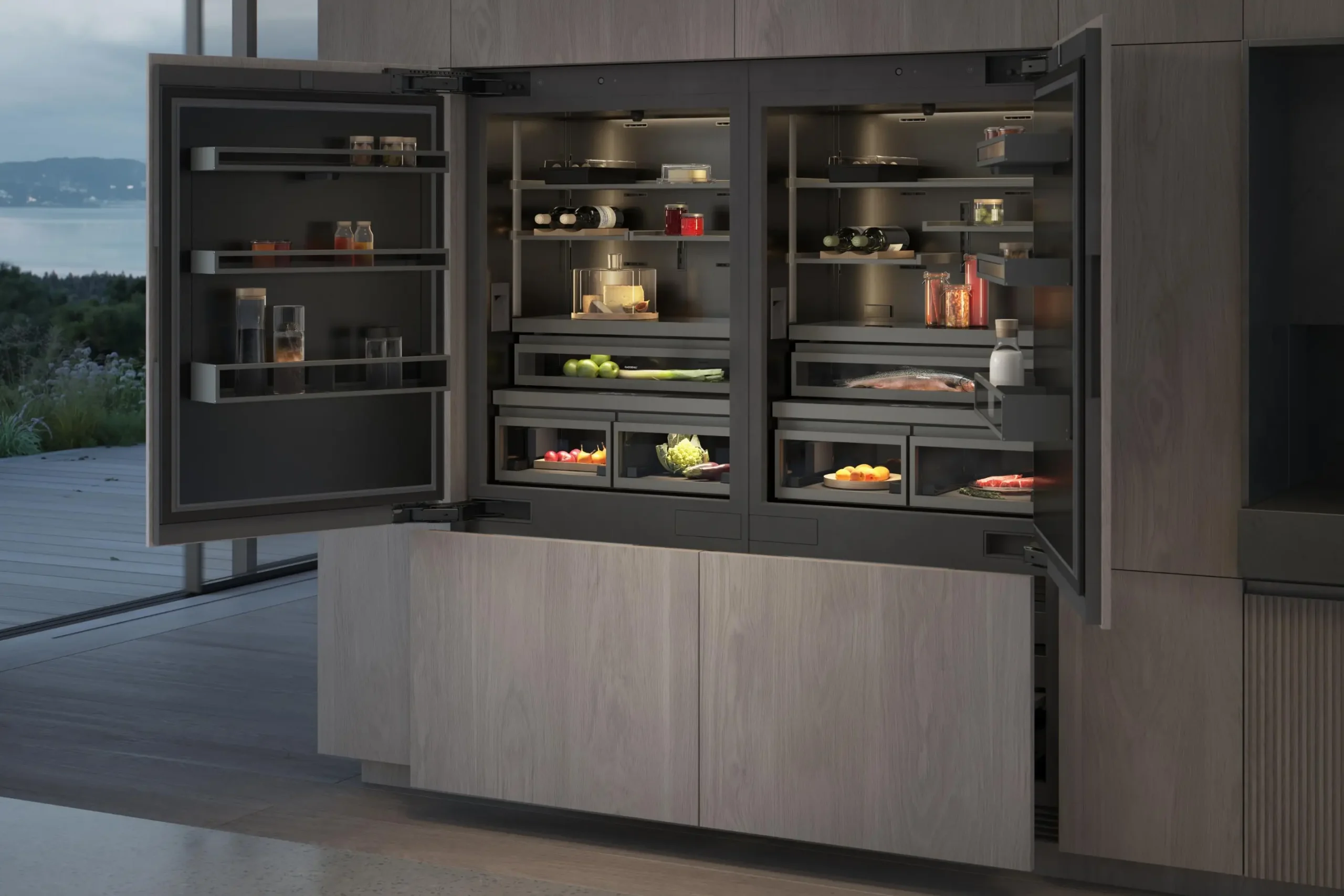
A built-in refrigerator is designed to sit flush with your cabinetry, typically at counter depth or shallower, with custom panels that let it blend seamlessly into your kitchen design. Built-ins are vented from the top or bottom rather than the back, which is what allows them to sit flush against the wall. They’re a popular choice in custom kitchen renovations because they read as part of the cabinetry rather than a standalone appliance.
What Is a French Door Refrigerator?
French door refrigerators pair two narrower doors on top, opening outward to reveal the fresh food compartment, with one or more freezer drawers below. This configuration is currently the most popular style in North American kitchens because it offers wide shelving for large platters and party trays, while keeping each door swing shorter — useful in galley kitchens or tight islands where a single wide door wouldn’t clear.
What Is a Side-by-Side Refrigerator?
Side-by-side models split the refrigerator vertically, with the freezer on one side and fresh food on the other, each behind its own full-height door. They need less clearance to open than a single-door model and often include external water and ice dispensers. The trade-off is shelf width — tall, narrow compartments can make it harder to fit wide platters, sheet pans, or a large turkey.
What Is a Counter-Depth Refrigerator?
Counter-depth refrigerators are built shallower than standard models — typically around 24 to 25 inches deep, not including the door — so the front sits flush with your countertops and cabinets instead of protruding into the room. They’re available in French door, side-by-side, and bottom freezer configurations. Counter-depth models generally hold slightly less than their standard-depth counterparts, but the streamlined, built-in look is a major draw in open-concept GTA kitchens where the fridge is visible from the living or dining area.
Comparing Refrigerator Configurations
Storage Capacity
Standard-depth French door and side-by-side models generally offer the most usable capacity for large households. Counter-depth and built-in models sacrifice some depth — and therefore some capacity — in exchange for a flush, integrated look. If you regularly cook for a large family or entertain often, factor this trade-off in before falling for the built-in aesthetic.
Layout and Door Clearance
French door and side-by-side configurations both need less swing clearance than a single-door refrigerator, which makes them easier to fit into islands, peninsulas, and galley layouts common in GTA renovations. Built-in refrigerators, because they’re flush with cabinetry, are the most flexible for tight floor plans but usually require the most planning during the design phase.
Organization and Access
French door models put fresh food at eye level in the upper compartment, which many people find more convenient day to day, with freezer drawers below for less-frequently accessed items. Side-by-side units offer full-height access to both compartments but narrower shelves. Bottom freezer models, whether standard or built-in, keep fresh food at eye level in a single wide compartment, which some homeowners prefer over the split French door layout.
Price and Installation
Built-in refrigerators carry the highest price point due to their custom panels, ventilation requirements, and installation complexity, and they’re usually specified early in a kitchen renovation rather than added after the fact. Freestanding French door, side-by-side, and standard bottom freezer models are more budget-friendly and easier to swap out during a future upgrade.
Which Refrigerator Is Right for You?
If you want a seamless, custom-cabinetry look and are planning a full kitchen renovation, a built-in refrigerator is worth the investment. If you need maximum storage for a large or busy household, a standard-depth French door model gives you the most usable space for the price. If your kitchen layout is tight on clearance, a side-by-side or French door configuration will be easier to live with day to day. If you want the built-in look without a full renovation budget, counter-depth is the middle ground worth exploring. For a deeper look at how refrigerators fit into a broader appliance package, see our Luxury Kitchen Appliances Buying Guide.
Shop Refrigerators at Castle Kitchens
Castle Kitchens carries built-in and freestanding refrigerators from Gaggenau, Thermador, JennAir, Miele, Liebherr, Monogram, True Residential, Viking, and Dacor, and more, at our Markham showroom. We help homeowners across the GTA compare configurations in person — checking interior layout, panel-ready options, and how a given model will actually sit in your kitchen design — before making a decision this size. Browse by configuration: Built-In, French Door, Side-by-Side, Bottom Freezer, and Counter-Depth.
See Refrigerators in Our Showroom
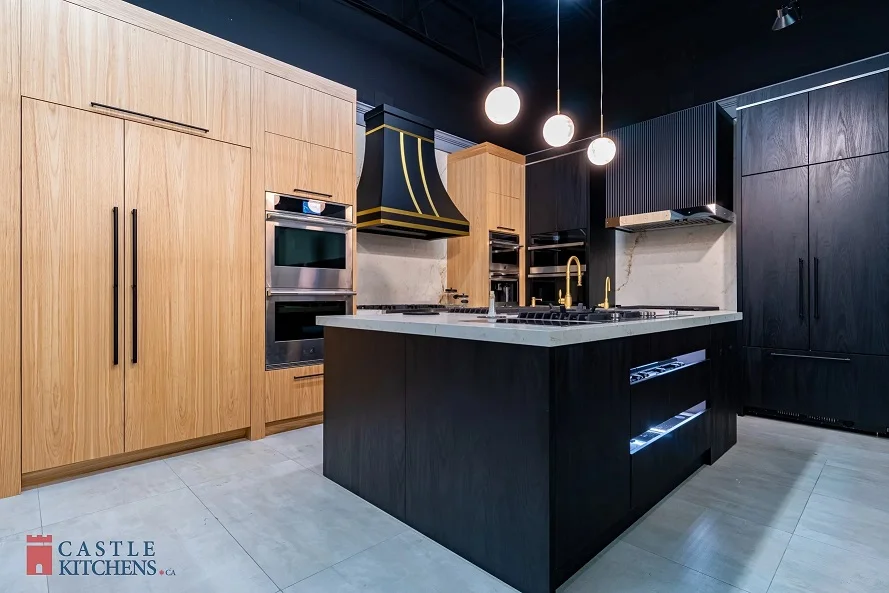
Photos and spec sheets only tell part of the story. Visiting our Markham showroom lets you open the doors, check shelf spacing against your own storage habits, and compare panel-ready finishes against your cabinetry samples in person.
Final Thoughts
The right refrigerator comes down to how you actually use your kitchen — how much you store, how you like to access it, and how much you want it to disappear into your cabinetry versus stand out as a design feature. Built-in, French door, side-by-side, and counter-depth models each solve for a different priority, and there’s rarely a single “best” answer across all four.
Visit Castle Kitchens’ Markham showroom to compare refrigerator configurations in person, with expert guidance for your next kitchen renovation.


