-

- Gas vs. Induction Ranges: Which Cooktop Is Right for Your Kitchen?
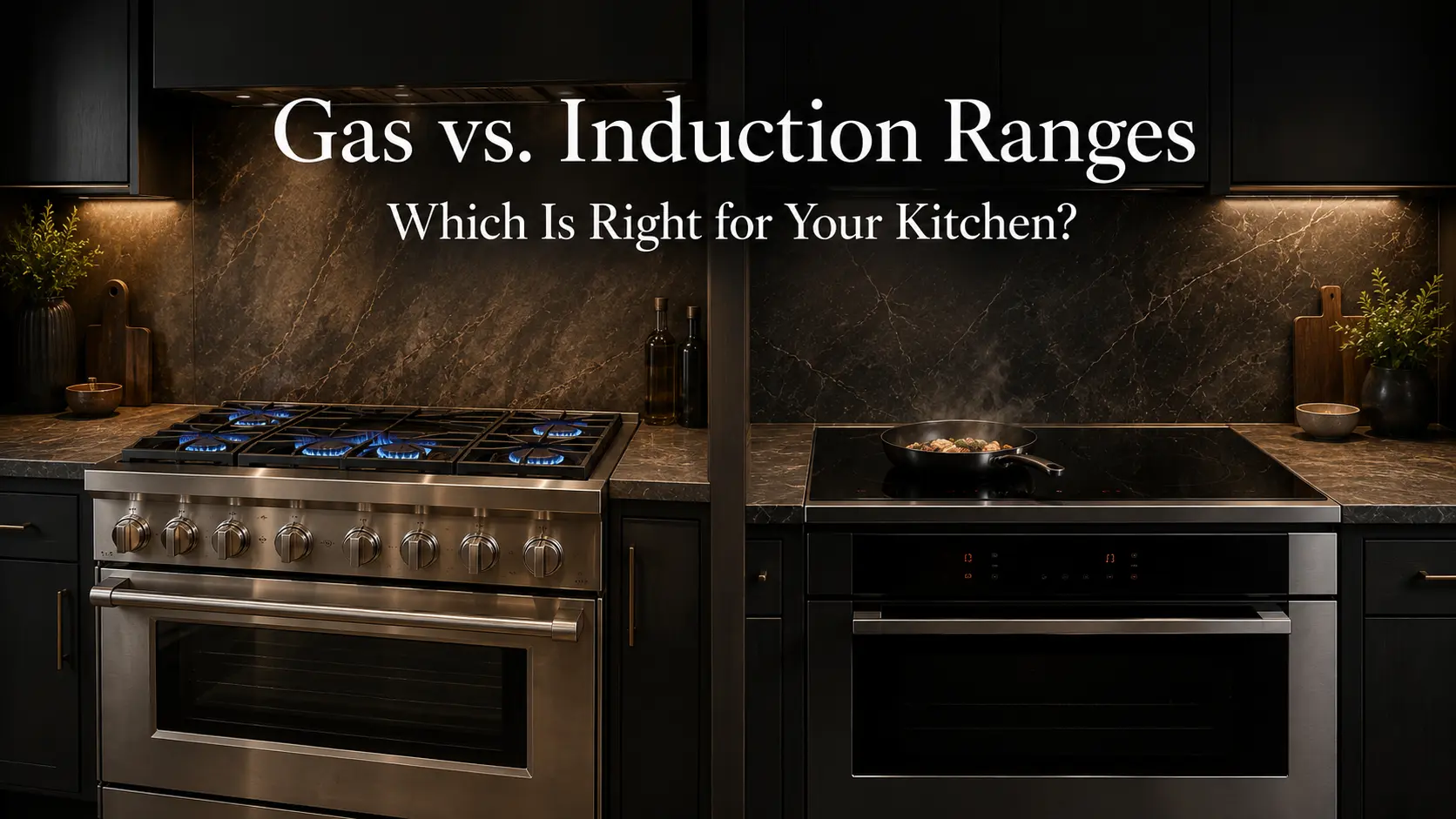
Gas vs. Induction Ranges: Which Cooktop Is Right for Your Kitchen?
Gas has been the default choice for serious home cooks for decades, but induction has closed the gap fast — and in some ways, pulled ahead. If you’re renovating and trying to decide between the two, the right answer depends less on “which is better” and more on how you actually cook, who’s using the kitchen, and what you want day-to-day cooking to feel like. This guide breaks down gas and induction ranges on performance, safety, cleaning, and cost.
At Castle Kitchens, our designers spec both gas and induction ranges into kitchens across Markham, Toronto, and the GTA every week, working with brands like Thermador, Miele, JennAir, Monogram, and Dacor — and more. Here’s how gas and induction actually compare.
What Is a Gas Range?
A gas range uses an open flame under grates to heat cookware directly. It’s the format most home cooks grew up with, and it remains the standard for professional and pro-style kitchens. Flame gives you instant, visible heat control — turn the knob and the response is immediate, with no lag between adjustment and result.
What Is an Induction Range?
An induction range uses electromagnetic energy to heat the cookware itself rather than the cooktop surface. A magnetic field is generated under a smooth glass-ceramic top, and heat is created directly in ferrous (magnetic) cookware — the cooktop surface around the pan stays cool to the touch. It requires compatible cookware (cast iron, stainless steel, and most enameled pots work; aluminum, copper, and glass generally don’t unless clad with a magnetic base).
Gas vs. Induction: Head to Head
Cooking Performance
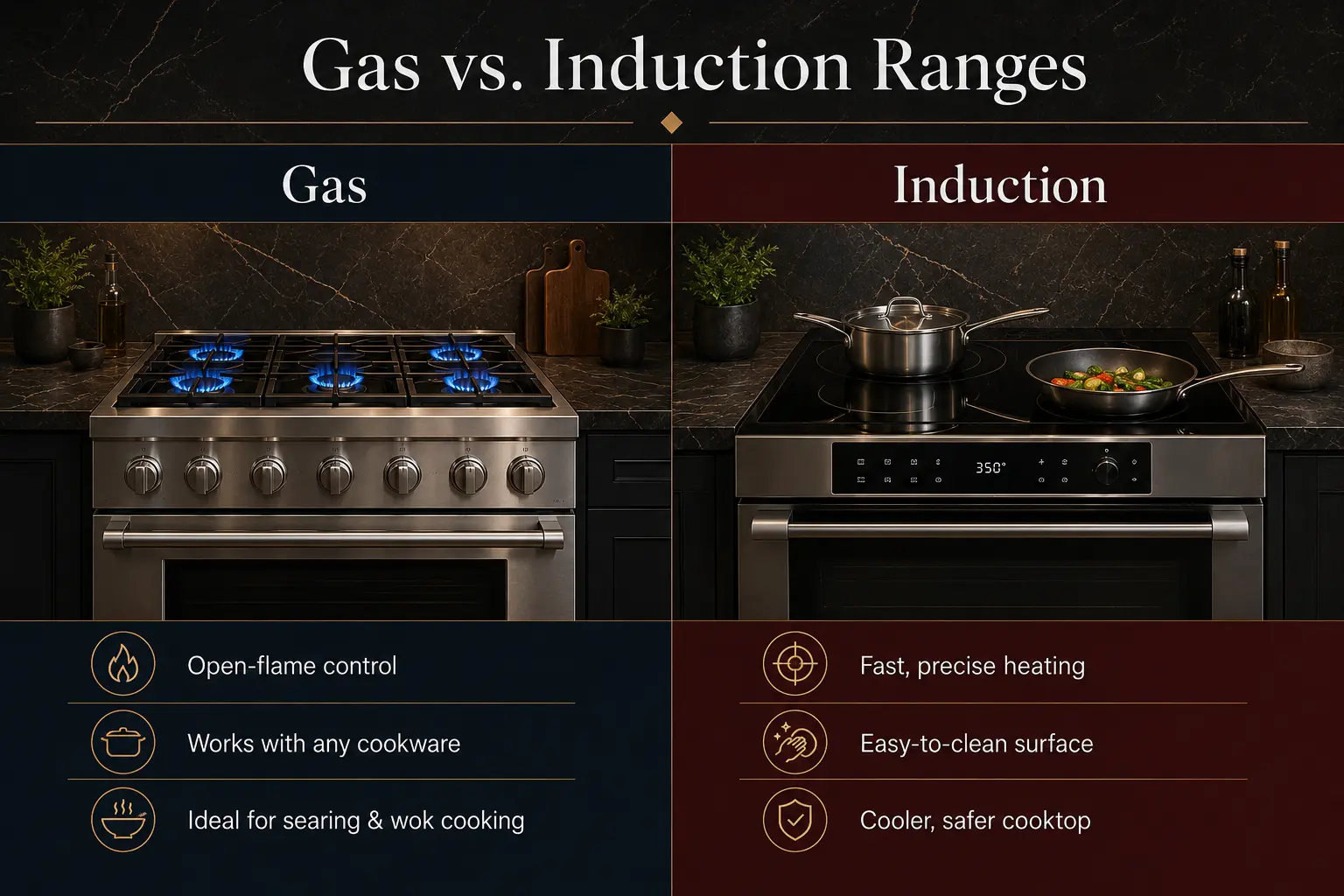
Gas is still the choice for high-heat searing, wok cooking, and anyone who cooks with an open flame — charring peppers, toasting spices, or working a carbon-steel pan. Induction, on the other hand, heats faster than gas in most side-by-side tests and offers more precise, repeatable temperature control, since the heat source responds instantly and evenly across the base of the pan rather than radiating outward from a flame.
Cleaning & Maintenance
This is where induction wins clearly. The smooth glass-ceramic surface wipes clean in seconds, with no grates, burner caps, or drip pans to remove and scrub. Gas ranges require more regular maintenance — grates, burner heads, and igniters all need periodic cleaning, and spills can work their way under and around the burner assembly.
Safety
Induction cooktops only generate heat when magnetic cookware is present and in contact with the surface, so there’s no open flame and the cooktop itself stays significantly cooler than gas or standard electric. That makes it a strong choice for households with young children, or anyone who wants a lower-risk cooktop. Gas requires normal open-flame precautions and benefits from strong ventilation, since it combusts fuel directly in the kitchen.
Cookware Compatibility
Gas works with any cookware. Induction requires magnetic cookware — most stainless steel and cast iron pieces work fine, but all-aluminum, copper, and glass pieces won’t heat unless they have a magnetic base. If you have a favourite set of cookware, it’s worth checking compatibility before committing to induction (a magnet sticking to the base is a quick test).
Ventilation
Gas cooking produces combustion byproducts and benefits from a properly sized range hood vented outdoors. Induction produces no combustion byproducts, though a hood is still worth having to manage steam, smoke, and cooking odours from whatever’s in the pan.
Which Range Is Right for You?
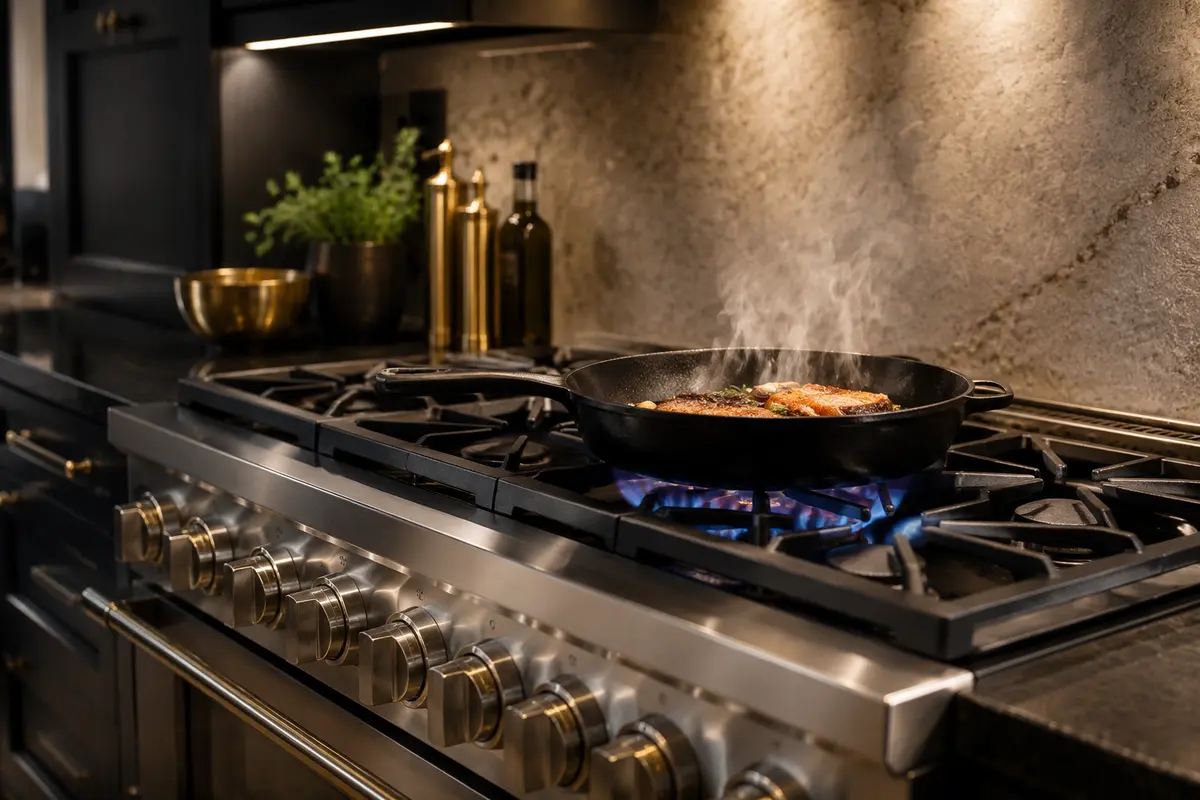
Choose gas if you cook with high, direct heat regularly — searing, wok cooking, or working with an open flame — and you want the classic, familiar feel of flame-based cooking.
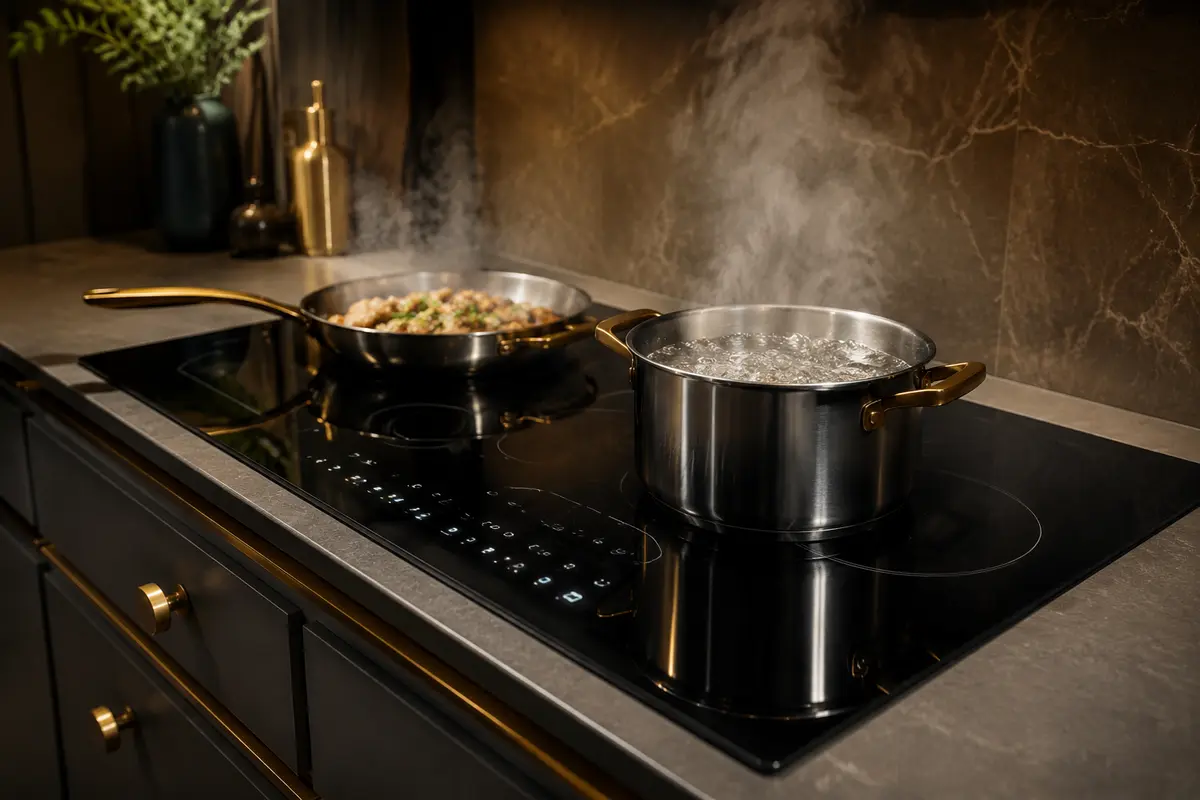
Choose induction if precise temperature control, fast heat-up, easy cleaning, and a cooler, safer cooktop matter more to you than the ritual of cooking over an open flame.
Not sure where you land? Our Dual Fuel vs. Induction Ranges guide covers a third option worth considering if you want a gas cooktop paired with the more even baking of an electric oven.
Shop Gas & Induction Ranges at Castle Kitchens
Our Markham showroom has live gas and induction ranges on display from Thermador, Miele, JennAir, Monogram, Dacor, and Café, plus several other luxury brands we carry, so you can compare the cooking experience side-by-side before you buy. We help homeowners across the GTA choose the right range for how they actually cook, then coordinate delivery and installation as part of your kitchen renovation.
Final Thoughts
There’s no universally “better” range between gas and induction — just the one that matches how you cook and what you want your kitchen to feel like day to day. Many of our clients end up choosing based on a single deciding factor, whether that’s wok cooking, cleaning time, or safety around young kids.
Visit Castle Kitchens to test gas and induction ranges side-by-side in our Markham showroom and find the right fit for your kitchen.


